
Building a private almanac with an AI agent gave me a chance to work differently: let it explore, inspect what came back, and help it find the next direction without needing to work through every implementation detail myself.

Building a private almanac with an AI agent gave me a chance to work differently: let it explore, inspect what came back, and help it find the next direction without needing to work through every implementation detail myself.

The low cost of exploration and addition led to a quickly expanding project. The final step was going in the opposite direction – reducing what made it into the final product, allowing the almanac to fade into the background and be a small piece of the overall detective experience.

One failed search during gameplay exposed a swath of data we had initially missed. This led us to greatly expand our source material and audit 5,441 records, ultimately resolving the missing entries and improving search.

Unclear requirements led the agent to produce a polished AI rewrite that sounded complete while dropping the details that mattered. Once again, building a system to validate the output was as important as the system and process generating the output.
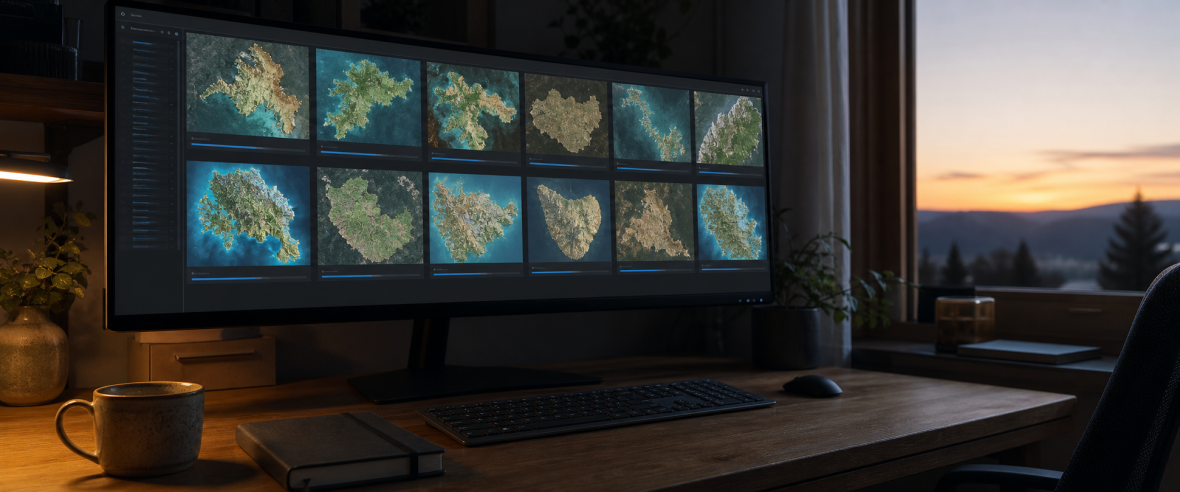
The recovered maps were too small to reuse. An agent rebuilt thirteen modern equivalents overnight, preserving the old game’s regional logic without preserving its pixels.

A screenshot gave the agent a direction, but human judgment spotted the faint resemblance that helped us move from failed renders to a working decoder.