But…did this study really happen? Let’s find out
Just Like Hiring My Own Research Staff – Google Book Search
As I mentioned in that past article, the study is sourced from the book What They Don’t Teach You in the Harvard Business School, by Mark McCormack.
I was curious, and searched for the actual study online, but was unable to find it.
It Isn’t True Just Because The Internet Said So – Or Books Either, Apparently
I had read the study was conducted at Harvard, and thus when researching, I searched for “Harvard written goals study.”
I have since learned that sometimes the study references a Harvard class of 1979, and sometimes a Yale class of 1953.
I went researched on Google Book Search and found additional references to such a Yale study. The premise and results were always the same. Either this was a reproducible experiment… or something was a little fishy.
On Google Answers, I found someone had offered $20 in 2004 for a study showing the effects of writing down a goal on its achievement.
The question was never answered, though a passing reference was made to the Harvard and Yale studies being myths.
While it was hard to find the study or proof that it happened, I wanted further confirmation – and I got it.
From The Horse’s Mouth: Yale Says There Is No 1953 Goal Setting Study
I finally came across a page at the Yale Law Library that asks “Where can I find the Yale study from 1953 about goal-setting?“. The answer, in it’s entirety:
It has been determined that no “goals study” of the Class of 1953 actually occurred. In recent years, we have received a number of requests for information on a reported study based on a survey administered to the Class of 1953 in their senior year and a follow-up study conducted ten years later. This study has been described as how one’s goals at graduation related to success and annual incomes achieved during the period.
The secretary of the Class of 1953, who had served in that capacity for many years, did not know of [the study], nor did any of the fellow class members he questioned. In addition, a number of Yale administrators were consulted and the records of various offices were examined in an effort to document the reported study. There was no relevant record, nor did anyone recall the purported study of the Class of 1953, or any other class.
(Source : Where can I find the Yale study from 1953 about goal-setting?)
So it appeared that my urging people to write down their goals was based on a study that never happened. Fortunately, I stumbled across something else quite interesting while researching the validity of the Yale and/or Harvard study.
Among the results of my online research for this article, I came across an actual study done with results received from 149 participants.
They too believe the story of the Harvard/Yale study to be a myth – and thus conducted a study of their own! The results of the study:
The positive effect of written goals was supported: Those who wrote their goals accomplished significantly more than those who did not write their goals.
[…]
- This study provides empirical evidence for the effectiveness of three coaching tools: accountability, commitment and writing down one’s goals.
- There now is a study demonstrating that writing one’s goal enhances goal achievement. However, it was not done at Harvard or Yale, but at Dominican University.
(Source: Summary of Recent Goals Research(PDF here: Gail Matthews Written Goal Study Dominican University), by Gail Matthews, Ph.D., Dominican University)
Note: the original links I had for this article keep moving, so I am now hosting a copy of the PDF since the links appear to break every couple weeks.
The moral of the story: Don’t believe everything you read online. Nonetheless, the initial advice is still sound – write down your goals!
]]>While we all have different notions about what defines success and happiness, some common beliefs permeate our culture. One such belief is the ideal of the American Dream:
The American Dream is belief in the freedom that allows all citizens and residents of the United States to achieve their goals in life through hard work. Today, it often refers to one’s material prosperity…
– Wikipedia, American Dream (emphasis mine)
Society promotes the American Dream as an ideal to aspire to – the type of life that we want to live, and the type of life we wish for our children.
Let’s take a step back and ask: Will such a life of achieving one’s goals and material prosperity ultimately make us happy?
The Disconnect – Achievement and Material Possessions Do Not Make Us Happy
 Sadly, the studies don’t appear to bear this out. While it is true that raising someone from poverty to a certain level of material wealth increases happiness, the American Dream may not lead to long term happiness. Consider what Tim Kasser writes:
Existing scientific research on the value of materialism yields clear and consistent findings. People who are highly focused on materialistic values have lower personal well-being and psychological health than those who believe that materialistic pursuits are relatively unimportant. These relationships have been documented in samples of people ranging from the wealthy to the poor, from teenagers to the elderly, and from Australians to South Koreans. [Page 22] […]
Almost everyone believes that getting what you want makes you feel good about yourself and your life. Common wisdom…says that if we reach our goals, our self esteem and satisfaction with life should consequently rise… [H]owever, people who are wildly successful in their attempts to attain money and status often remain unfulfilled once they have reached their goal. […]
We may want a raise, a new car, or greater status… Yet evidence suggests that, beyond having enough money to meet our basic needs for food, shelter, and the like, attaining wealth, possessions, and status does not yield long-term increases in our happiness or well-bring. Even the successful pursuit of materialistic ideals typically turns out to be empty and unsatisfying. [Page 43] – Tim Kasser, The High Price of Materialism (emphasis mine)
What Then, Does Buy Happiness?
 What if I told you that one of the keys to our happiness is not to continue improving our own lives: but rather, to make a difference in the lives of others?
This may sound counter intuitive – and that’s ok, because in our culture, it is. As Dan Gilbert, the author of Stumbling On Happiness says:
When people give of themselves to others, and are recognized for it, they experience lots of happiness and increase in self-esteem.
Interestingly, though, we’ve just done a study that shows that when people are offered the opportunity to do something selfish or something altruistic, they take the selfish option by and large. Culture has told them this is what they should do to be happy, but if you force them to take the altruistic option, they’re much happier.
Altruism is a thing you might resist kicking and screaming—“I want to keep my money; I don’t want to give it away”—but if you give it away, it will probably make you happier than most of the things you could spend it on.
– Daniel Gilbert, interview for Shambhala Sun (emphasis mine)
Not Convinced? Further Keys to Happiness – Including Altruism
Still unsure about what makes us happy? Consider this presentation by Martin Seligman delivered at TED. At the eighteen minute mark he specifically mentions altruism as a key to happiness: when we do something fun, our happiness is fleeting, but when we are philanthropic, and help another person, that happiness lasts.
The series of various interventions you can embark on to increase your own happiness are at about the fifteen and a half minute mark. The entire presentation is wonderful, and well worth a watch if you’ve got twenty five minutes to spare.
PS – Another Presentation on Happiness, By Dan Gilbert
I first heard of Dan Gilbert through a fascinating talk he gave at TED, entitled “Why are we happy?”
I have watched the entire presentation three or four times with various friends, and we’ve always loved it. Enjoy!
]]>“Easy question” I thought to myself, as my fingers flew to the keyboard and I rattled off 10 books, then 20. I could have gone on, but I stopped.
More Items Does Not Make the List Better
I took a step back, and realized that my reader didn’t need yet another long lists of books – there are plenty of those online, and if you want an endless list of reading material, check out this list of all the self improvement products at Amazon (1,140 at last count).
No – she was asking for my help, to sort through it all. The more items I gave her, the less helpful I would be.
A better approach would be to give her a list that provided the best value – a list of the best personal development books, and the shorter better.
This was a much more difficult problem. After much reflection, here is my list.
The Best Personal Development Books Reading List – A Practical, Short List
Let’s get right to it – I’ll lay out the list for you, and then explain each of my choices.
- The Greatest Salesman in the World by Og Mandino
- How To Win Friends and Influence People by Dale Carnegie
- Getting Things Done (GTD) by David Allen
The Best Personal Development Books Reading List Explained
The Greatest Salesman in the World
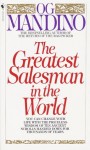 This book is the perfect place to begin. The “scrolls” (self affirmations/positive self talk) at the end are what make this book worthwhile. As recommended, I read each one to myself 3 times a day for a month. I now read them at least once a day and alternate the scrolls each week. The main purposes of this book are to:
- Instill the discipline to stick to the process daily.
- Provide a starting point for future personal development with broadly applicable lessons.
- Show tangible results.
How To Win Friends and Influence People
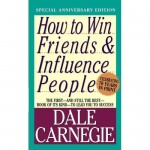 Once the you’ve had a taste of personal development, and developed the habit of committing to it daily by following The Greatest Salesman in the World, it’s time to start working on interpersonal skills, for a few reasons. The primary things I gained from this book are:
- Effective Conflict Resolution
- Breaking down social interactions into patterns
- Leadership Training
Getting Things Done (GTD)
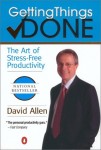 GTD will not provide you more time to do things, but it will keep all the machinery focused and moving forward. The main results gained from Getting Things Done are:
- Clearing your head so you can focus
- Never lose anything again
- Know that you are doing exactly what you are supposed to be doing
Are some of the things we do to save money… really just wasting our time?
Here’s a simple example – something I did one time when I was also doing a time log.
For a couple months I wrote down how long it took to fill up my car at two different gas stations – and today, I want to show you my results.
Gas Prices Versus Extra Time
I tracked how long it took me to fill up my car at
- Costco: where gas is relatively cheap, but often has a line.
- Chevron: where gas is more expensive, but I’ve never had to wait.
I also tracked how much the gas costs, and the difference is pretty consistently about 4% (exact numbers below)
Here is what I found:
Data and Calculations:
- Costco Price: $3.849 per gallon = $3.74 after Amex 3% off
- Chevron price: $4.079 per gallon = $3.96 after Amex 3% off
- 12.72 gallons filled
- At Costco: 15 Minutes of waiting to use the pump.
- $0.22 difference in price per gallon
- Total Savings at Costco: $2.84
Is It Worth The Time?
Let’s assume that the only extra time is the time spent waiting in line. Since I am paying with post-tax dollars, I will consider the amount of pre-tax dollars I need to earn for the difference in price as well. I’ll go with a marginal tax rate of about 30%. For $2.84 saved per trip:
- I spend an extra 15 minutes
- I save about $11.35 per hour.
- This is the equivalent of earning about $16 per hour
How about those with SUVs and Minivans?
SUVs and Minivans:
- About 21 gallon tanks
- They are likely saving as much as $4.69 per fillup
- This works out to saving about $18.74 per hour
- This is the equivalent of earning about $25 an hour.
Depending on who you are, it may or may not be worth it.
In my case, I’m not really saving any money – if I sit in a long line to save a few cents on gas, I’m just wasting my time.
This About More Than Gas
Now, I’ve used gas in this article as an example – but the truth is, this is more than just about gas.
This is about a mindset of analyzing where your time really goes. I no longer worry about saving money on gas, because I’m looking at how much it costs me in time.
Once I started thinking like this, it’s what led me to some other interesting experiments in my life where I began trading money for more time.
And if you haven’t started it already, I encourage you to see where your time goes – do a time log.
Track everything – and maybe you’ll find your own example of something where saving money is more expensive than you think!
]]>He smiled, gave me a big, musky, hug, and drove away.
I wasn’t sure if I had just done a good deed, or been hustled by a Craig’s List scam artist.
This story actually begins months before – so let’s go back to the beginning.
This is a true story, with names changed by request.
My New Beginning
We were poor graduate students sharing a tiny one bedroom apartment in what you could kindly call a “less desirable” neighborhood.
That summer, my roommate and I parted ways as we both moved on to new places to live. All I owned was my mattress, guitar, computer and some clothes.
“Here,” he said “take these. You’ll like them – my new roommates already have a full kitchen.”
He handed me a pair of rusty frying pans, some tupperware, random mismatched utensils and spatulas.
It wasn’t much, but then I wasn’t much of a cook.
And it was better than nothing.
Presents From Mom
The next month, I visited my parents and told my mom how I rarely cooked, and about the mismatched items in my kitchen.
My mom was not amused and, being about as “mom” as they come, decided to go through her spare (and not so spare) cookware to fill out my kitchen.
She picked out some Cutco knives, Circulon pans, a large pot for boiling, a Vitamix Blender (which lasted me about 12 years before it died!) and various other high quality kitchen items that were far too nice for my little apartment.
I protested that my old kitchen stuff was fine.
I never was very successful at winning arguments with my mother…
So it was with a heavy heart, and heavy duffle bag, that I headed home with a literal “mother lode” (hah!) of kitchen goodies.
Time To Clean
Months later, and short on storage space, it was time to throw things out.
I dug around in the kitchen and found my old rusty pans which I never used anymore (Anymore? I hardly used them at all!).
I felt bad throwing them in the trash, so I decided to put them on Craig’s list for free to see if anyone wanted them.
I couldn’t imagine anyone would, but why not? If nobody picked them up in a couple days, I’d just throw them out – and at least my conscience would be clear that I had tried.
The ad read “FREE – Rusty Pans. Use at Your Own Risk.”
Perhaps I could have used a more enticing headline.
Enter Carlos
Within hours of me posting, I had an email from someone asking if the pans were still available, and if he could pick them up that afternoon.
Carlos drove up in a beat up white truck filled with random junk – chairs, a plastic table, empty flowerpots.
He saw me waiting outside, with two rusty pans in my hands, turned off the engine and stepped out. He looked a little dirty, smiled and appeared happy to see me.
I wondered how safe I was here with this stranger.
“Here’s the pans!” I said, and practically shoved them in his face.
He took them carefully from me and gently looked them over. You would have thought my rusty pans were works of art.
“They’re perfect!”
I asked what he was going to do with them.
Enter Juan
Carlos explained to me that his brother, Juan had been living on the street, and had been disowned by his siblings, parents, friends – everyone but Carlos, who never gave up believing in him.
Carlos drove an hour each day after work to Venice where Juan was staying, and every day he’d walk around, find Juan, spend time with him, and take him to get some food – often his only meal that day.
On days that he couldn’t find Juan, Carlos would go home worried that something had happened.
His words struck me as sincere, and I was moved by his story.
Carlos told me he had been driving around all day collecting items for Juan’s tiny studio apartment (which of course he was renting with money Carlos was loaning him).
He excitedly showed me the flower pots, chairs and ratty old plastic table.
I wasn’t sure how successful Juan would be, but I decided it wasn’t my place to judge.
I was very touched by Carlos’ dedication, and wanted him to succeed.
“Just a second,” I heard myself saying “I think I may have more upstairs.”
I walked up the steps and wasn’t sure what I was looking for. I knew I didn’t have any other rusty pans.
As I reached my apartment, I decided if I really wanted to make a difference, perhaps I should try giving him something that would last.
I picked out a couple of Cutco knives, and a fancy spatula that I had never used.
I wrapped the knives in paper towels and headed back outside.
I went back to Carlos and handed them to him. “Be careful, I don’t have a sheath for the knives, they are very sharp.”
He beamed as he looked them over. “My brother will love these. It’s the first time he has had a home in four years. Thank you so much.”
He smiled, gave me a big, musky, hug, and drove away.
The End? Not Really…
Over the years, I told this story countless times to family, and friends.
We enjoyed speculating how it turned out and discussing whether I had actually helped someone in need – or was taken in by a con artist.
- Did Juan manage to keep his apartment?
- Did he end up back on the streets?
- Did Carlos just hustle me out of my expensive cookware?
We thought we would never find out what really happened (read on and you’ll find out), but it was always fun to debate – and it was a great story about how no matter how useless you may think your junk is, someone on Craig’s List will take it.
A Strange Phone Call
Years later, I received a strange phone call from a blocked number.
Sometimes it is my family, and sometimes blocked numbers are telemarketers. I answered cautiously.
Them: “Hello?”
Sid: “Hello?”
Them: “Is this Sid Savara?”
It wasn’t my family. “Telemarketer” I thought, irritated.
Me: “Who wants to know? Who is this? I am very busy right now”
There was a moment of silence and then.
Them: “I am sorry, I didn’t realize you were busy. Is your email address still _____?”
Me: “Yes, who is this? By law you have to tell me if I ask you.” (I don’t know if this is true, but it sure sounds good!)
Them: “Sorry to disturb you, I will email you.” [Click]
I waited to see if they would call again.
Nobody called, and nobody emailed.
I carried on life as usual, and went to sleep, having forgotten the phone call.
How The Story Finally Ends
The next morning when I woke up, I received an email titled “He Is Getting Married!”
I was confused.
I didn’t recognize the name – and with a bogus headline like that, how had it gotten past my spam filters?
I opened it up – and learned how this story, which started over five years ago, finally ended.
Yes – Juan did manage to finally hold down a job! And he managed to keep that same little studio apartment! Now, finally, he was getting married – to a woman named Eva.
But the best part of the story was what Carlos explained later in the same email…
Eva’s Brother Ivan Has Suspicions
His fiancee, Eva, had asked Juan many times to tell her friends and family his story – because she was so proud of his past and that he had managed to make something of himself.
How he had survived living on the street, and how his brother had driven all over town to pick up free items from Craig’s List to furnish the tiny apartment when he finally started to pull his life together.
The ugly flower pots, the ratty table, the old rusty frying pans.
One day Eva, Carlos and Juan were sitting in his apartment and talking with Ivan, Eva’s brother – who not only disliked Juan, but believed him and Carlos had made the whole thing up because Eva had a soft spot for such stories of overcoming odds.
Ivan didn’t believe Juan, and had never thought he was good enough for his sister.
Ivan felt he was a liar trying to take advantage of her generosity and naïveté, and didn’t want them to be married.
During this particular evening, Ivan’s snide remarks escalated to shouting and he let loose with all his accusations. He called Carlos and Juan scoundrels, that there was no way such a far fetched story could be true, and told them he would do everything in his power to convince Eva to leave Juan.
Juan was angry and practically in tears. He kept repeating “What else can I tell you? This is my life, this is who I am.”
Ivan was not having it. Ivan wanted proof.
Unfortunately, by then so many years had passed that over time Juan (with help from his family) had replaced the furniture and random household items that strangers had given him. The studio no longer was just thrown together hand me downs – it was a small, comfortable home.
Ivan started pointing things out in the apartment – “Did your brother pick up this couch? How about this table? The chairs we are sitting on? No? How can I believe your story?”
Ivan went inside the small kitchen and began again – “Look how new this toaster is. Look at this nice microwave.”
The yelling between Ivan and Juan continued, as both Carlos and Eva tried to plead with them to stop. Neither would back down.
Ivan threw open the cabinets, he pulled out random food items, water bottles, – and suddenly…. he stopped.
He stepped back, and looked at Juan, and back at Eva.
Juan had kept his home relatively clean, but in all those years hadn’t cleaned out the cupboards.
Perhaps he had not done much cooking either in the studio’s little kitchenette area.
Ivan reached in the back of the cupboard, moved aside some containers, and pulled out two old, rusty frying pans.
My old, rusty frying pans.
Frying pans that helped change a man’s life, and now cemented an engagement.
And that was why Carlos had called me.
The End. Really.
The moral of the story?
“Love and kindness are never wasted. They always make a difference.”
Helen James
And I would add…sometimes they make a bigger difference than we can imagine.
If you do want to take away some actionable advice from this, I would say the moral of the story is this:
Give away something on Craig’s List (or a Salvation Army, or Goodwill, or your local classified equivalent) that is just taking up space and not doing you any good – who knows what kind of difference it might make in someone’s life.
Happy Holidays and Merry Christmas.
Take care of yourself, and take care of each other.
]]>