“Easy question” I thought to myself, as my fingers flew to the keyboard and I rattled off 10 books, then 20. I could have gone on, but I stopped.
More Items Does Not Make the List Better
I took a step back, and realized that my reader didn’t need yet another long lists of books – there are plenty of those online, and if you want an endless list of reading material, check out this list of all the self improvement products at Amazon (1,140 at last count).
No – she was asking for my help, to sort through it all. The more items I gave her, the less helpful I would be.
A better approach would be to give her a list that provided the best value – a list of the best personal development books, and the shorter better.
This was a much more difficult problem. After much reflection, here is my list.
The Best Personal Development Books Reading List – A Practical, Short List
Let’s get right to it – I’ll lay out the list for you, and then explain each of my choices.
- The Greatest Salesman in the World by Og Mandino
- How To Win Friends and Influence People by Dale Carnegie
- Getting Things Done (GTD) by David Allen
The Best Personal Development Books Reading List Explained
The Greatest Salesman in the World
 This book is the perfect place to begin. The “scrolls” (self affirmations/positive self talk) at the end are what make this book worthwhile. As recommended, I read each one to myself 3 times a day for a month. I now read them at least once a day and alternate the scrolls each week. The main purposes of this book are to:
- Instill the discipline to stick to the process daily.
- Provide a starting point for future personal development with broadly applicable lessons.
- Show tangible results.
How To Win Friends and Influence People
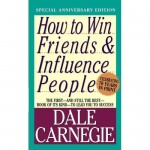 Once the you’ve had a taste of personal development, and developed the habit of committing to it daily by following The Greatest Salesman in the World, it’s time to start working on interpersonal skills, for a few reasons. The primary things I gained from this book are:
- Effective Conflict Resolution
- Breaking down social interactions into patterns
- Leadership Training
Getting Things Done (GTD)
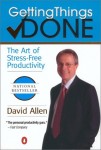 GTD will not provide you more time to do things, but it will keep all the machinery focused and moving forward. The main results gained from Getting Things Done are:
- Clearing your head so you can focus
- Never lose anything again
- Know that you are doing exactly what you are supposed to be doing
“A good plan implemented today is better than a perfect plan implemented tomorrow.”
George PattonYou may be familiar with this old Abraham Lincoln quote: “If I had six hours to chop down a tree, I’d spend the first four hours sharpening the axe.”
For many people, that is a life-changing idea. A little preparation can save hours of wasted motion.
Preparation has a shadow side.
But preparation has a shadow side. If you keep sharpening the axe because chopping the tree feels uncomfortable, preparation has quietly become procrastination.
Real Work versus Metawork
Metawork is work about the work. It is planning, reading, researching, outlining, organizing, tool-shopping, and setting up systems.
Done well, metawork is valuable. It helps you see the path before you start walking. It can make the next hundred hours more effective.
But metawork is not the result. It is only useful if it leads to action.
At some point, the plan has to become a draft. The research has to become a decision. The system has to become a habit. The preparation has to turn into the thing you were preparing to do.
The Fitness Example
Consider someone who wants to get healthier by exercising.
Choosing a gym, comparing workout plans, reading about cardio versus strength training, and deciding which exercises to do on which days can all be useful.
But none of it makes you stronger by itself. At some point, you have to exercise.
| Productive Action | Metawork |
|
|
When Preparation Becomes Procrastination
The tricky thing is that metawork feels responsible. It gives you the emotional reward of being productive without the risk of producing something imperfect.
That is why it can be so seductive. Planning rarely exposes you. Doing does.
If there is a goal you have been preparing for forever, ask yourself a simple question: what would count as direct progress today?
Not more research. Not a better tool. Not a cleaner system. Actual movement.
Prepare enough to begin. Then begin.
]]>25% of New Year’s resolutions are broken in the first week alone.
Within 6 months, over half of New Year Resolvers will have given up.
Why?
Why is it that so many resolutions are doomed from the start?
Here’s one major reason I’ve found with clients:
You need to learn how to balance these new resolutions with your prior commitments.
You’re Already Busy
Resolutions usually involve new commitments.
The problem is: you’re already busy.
Imagine this: if on December 31st, you were already living a life where every moment of the day was filled with something – how can you do everything you’ve always done, and squeeze in time for new things on January 1?
So the change isn’t just starting new resolutions …
You also need to take this opportunity to sharpen your focus, and give up on a few things.
The answer is:
Commit to doing less of some things: so you can do the important things better.
The simplest way I’ve found of letting go is to actively decide what I will work on right now – and what I’m going to let fall to “maybe” in my life.
How? You make two lists:
- Your “Todo” List – The things you are working on today, this week, this month…anything you are actually working on
- Your “Someday” List – Low priority projects that you know you can’t commit time to – and you accept that they won’t get worked on until “Someday” in the future (which could be never)
The Someday List
Very briefly, the Someday list is my list of items that I intend to get to “Someday.”
So working out may be something that is on my Todo list right now, because I know I am going to do that today and throughout this week.
On the other hand, some books I am planning to write are sitting on the “Someday” lis.
They are projects I would like to work on, but they are not important enough to me to make it on my Todo list right now….
And maybe they never will.
Every week or two, I review the items on that list.
If I decide I am ready to begin a project that week… I move it from Someday into my normal Todo List.
I can hear the question now…
If it’s on your Someday list and it never gets done, what’s the point?
The Point Is…Prioritizing
If you don’t explicitly decide what is on your Someday list, you implicitly put everything you aren’t actively working on on it.
- Do you have a dream of running a marathon?
- Starting your own business?
- Writing a book?
If you don’t actively take action on it then you are already letting it be pushed off into the future – by the day-to-day things that come up and happen.
What To Do Today – Vs “Someday”
And truthfully – some of those “emergencies” don’t need to be dealt with today – or sometimes ever.
Save those low-value, time-consuming tasks for “Someday” – and make today a day that matters to you.
Don’t be a statistic – don’t be one of the 25% who gives up this first week! There’s still time to turn it around.
And don’t worry if you don’t feel this moment, or this year, or this week, or this situation isn’t “exactly right.”
You don’t need “exactly right” on the outside to make a change – you just need to take action, right now.
]]>“If we wait for the moment when everything, absolutely everything is ready, we shall never begin.”
Ivan Sergeyevich Turgenev